Meme
Wandered around the Ballona Creek estuary, and took some pictures, leading me to create a meme.
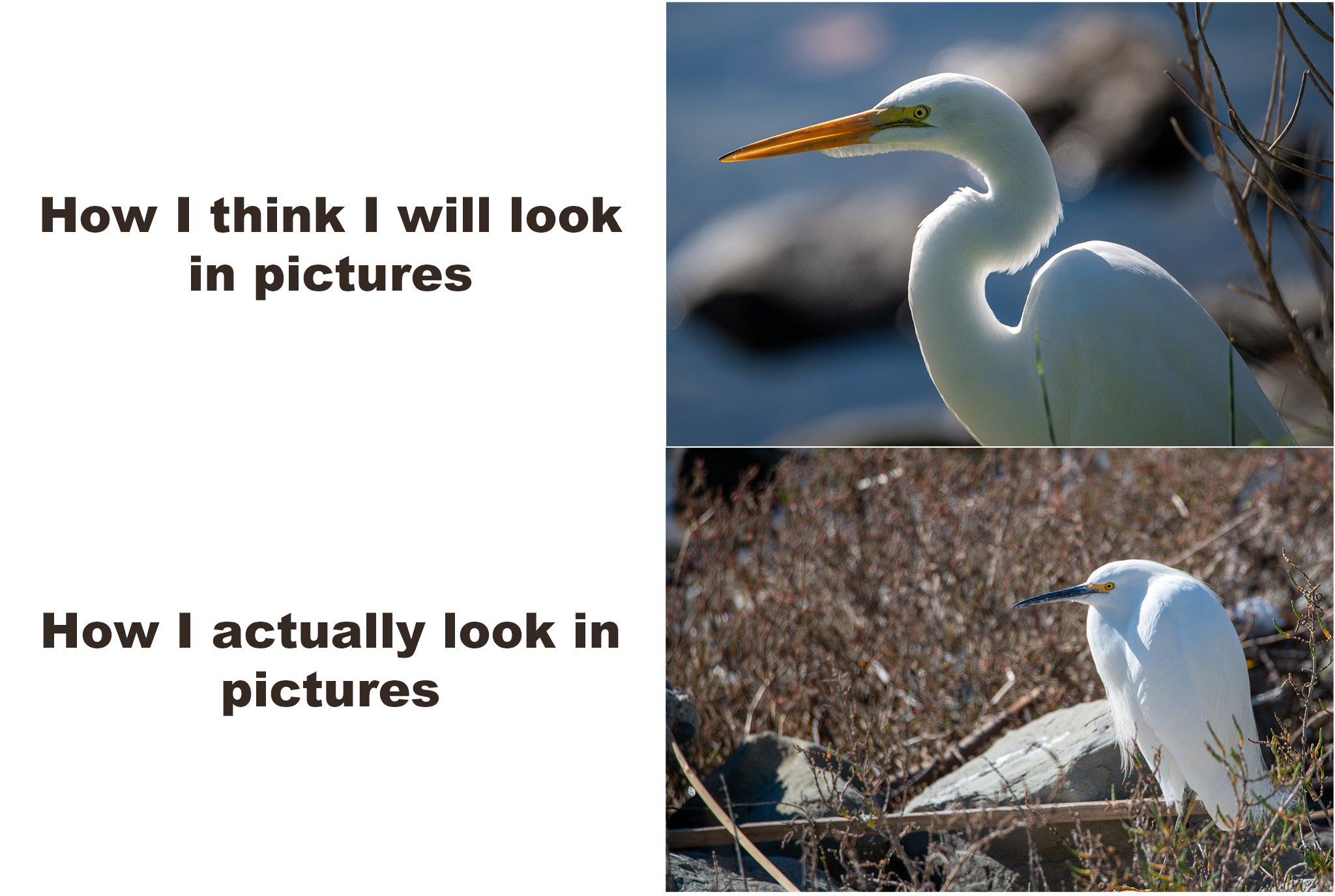
Wandered around the Ballona Creek estuary, and took some pictures, leading me to create a meme.
Fifteen years ago, I worked on a blog that was hosted via Blogger.com (aka blogspot.com aka Google). We had a custom domain name for the blog and everything. It was pretty cool.
Now, many years later, the domain name is finally set to expire. We haven’t touched that blog in eleven years, but it still seems a shame for the content to just vanish. So I thought about making a static copy to host somewhere.
Google makes cloning one of these blogs difficult. They do, however, give you a backup/download capability. I went through re-activating the Google account that was tied to the blog, giving all sorts of identifying information and getting verification emails and texts. That done, I initiated the process to backup the blog, and shortly thereafter received an email that my download was ready. However, now Google is absolutely certain I’m not who I say I am (even with verification emails and texts), and their security locked me out of the account. Also, when I read up on the subject, even if I could download it, their site backup is an XML bundle that only works for reimporting to their blog system anyway.
So I thought I’d use the good old standby wget to build a static copy. I tried:
wget --mirror -w 2 -p --html-extension --convert-links --restrict-file-names=windows http://www.myurl.comYes, this site was so old that we didn’t use SSL… Still, Google stores the assets off in a bunch of other subdomains, and I was unable to come up with the correct syntax to allow wget to follow those. I’d get the pages, but everything still linked to the Google servers for the assets. That wasn’t going to work.
So next I used the old, powerful F/OSS friend, httrack. My first attack was as follows:
httrack "http://www.myurl.com/" \
  -O "myurl-offline" \
  -%v \
  --robots=0 \
  "+www.myurl.com/*" \
  "+*.blogspot.com/*" \
  "+*.bp.blogspot.com/*" \
  "+*.googleusercontent.com/*" \
  "+*.jpg +*.jpeg +*.png +*.gif +*.webp" \
  "+*.css +*.js" \
  "+*.mp4 +*.webm" \
  "-*/search?updated-max=*"
This worked — but a little too well. This blog was part of a community of sites, many of which were hosted elsewhere on blogspot. The cloning was slow. Then I noticed it had used up 2G of disk space, whereupon I discovered that I was happily making static copies of twelve other blogs from that community, and possibly more to come! I interrupted the process, and tried again removing the blank check for blogspot sites:
httrack "http://www.myurlcom/" \
    -O "myurl-offline" \
    -%v \
    --robots=0 \
    "+www.myurl.com/*" \
    "+*.bp.blogspot.com/*" \
    "+*.googleusercontent.com/*" \
    "+*.jpg +*.jpeg +*.png +*.gif +*.webp" \
    "+*.css +*.js" \
    "+*.mp4 +*.webm" \
    "-*/search?updated-max=*"
This was successful!
I now have a static version of the site. It’s not perfect; some references like the user profile links still point at blogspot. But if I want to be able to post the static site somewhere, I can do that, and it will be sufficiently usable that people can still experience the postings and articles.
Ugh, so the WordPress built-in gallery content type seems broken again. I’m not sure it’s worth bothering about. If i fix it locally, it’ll just break again on some future update.
We used to have a lot of physical devices on our network*. Servers, firewalls, file-shares, staging servers, development machines… all sitting on the network with their hard drives endlessly spinning, spinning, spinning!
System administrators are fond of referring to platter-based hard drives as “spinning rust,” partly as a reference to the ferro-magnetic iron crystals that store the actual data, but also to remind us that it’s always decaying and corroding. Over time, drives start generating errors or becoming unreliable. When we had physical devices that exhibited issues, we’d yank the hard drive and replace it. Over the years, we’d accumulated a pile of a dozen or more drives that were unreliable or bad but still contained data.
The data is not especially sensitive, but there could be stuff that could be abused or belongs to other parties. There may well be meeting notes, source code, sample data files, or there could be cached passwords or other credentials. It’s not worth just hoping it’d be OK to release to the world. So it’s a chore to render this data unreadable.
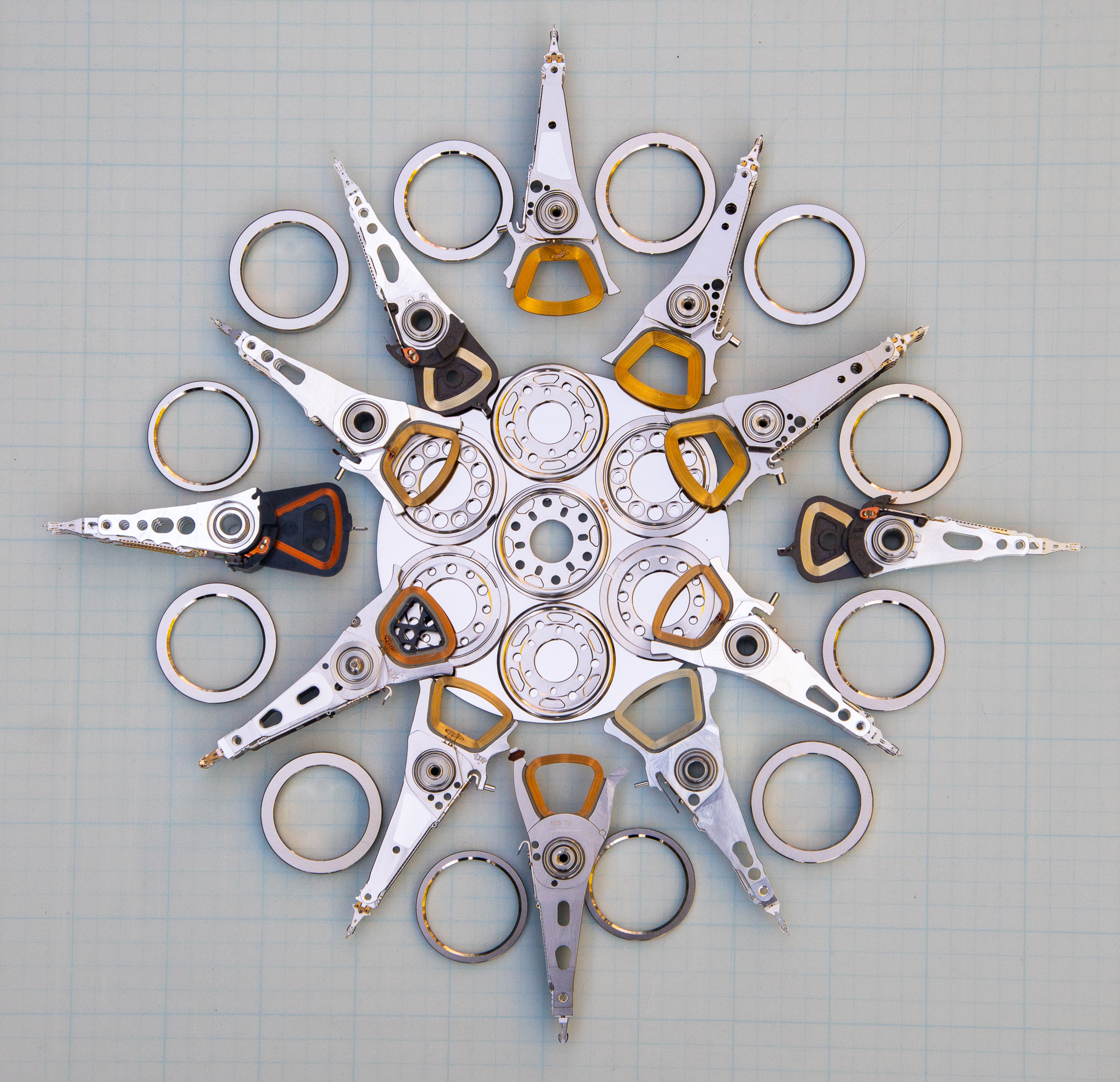
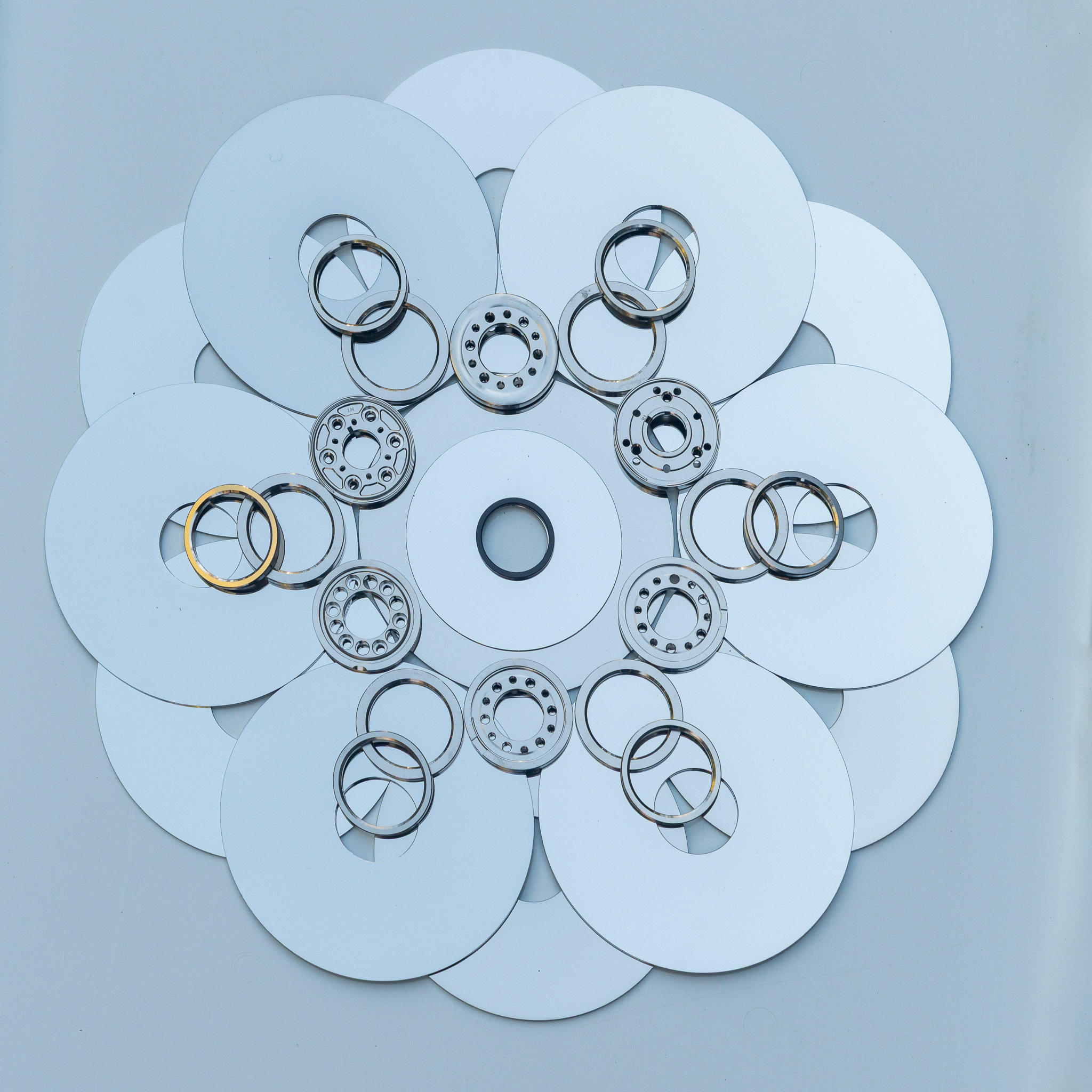
Pulling apart spinning platter hard disks is humbling. These are incredible little devices, with incredibly precise machining and elegant engineering. Going through a pile that spans a decade, you can actually see the improvements in technology: new vibration damping systems, different head-parking strategies, traps for dust, and more. I see these parts, and am inspired by the craftsmanship that goes into them.
So in the spirit of admiration, I offer these (hopefully unreadable) holiday memories.
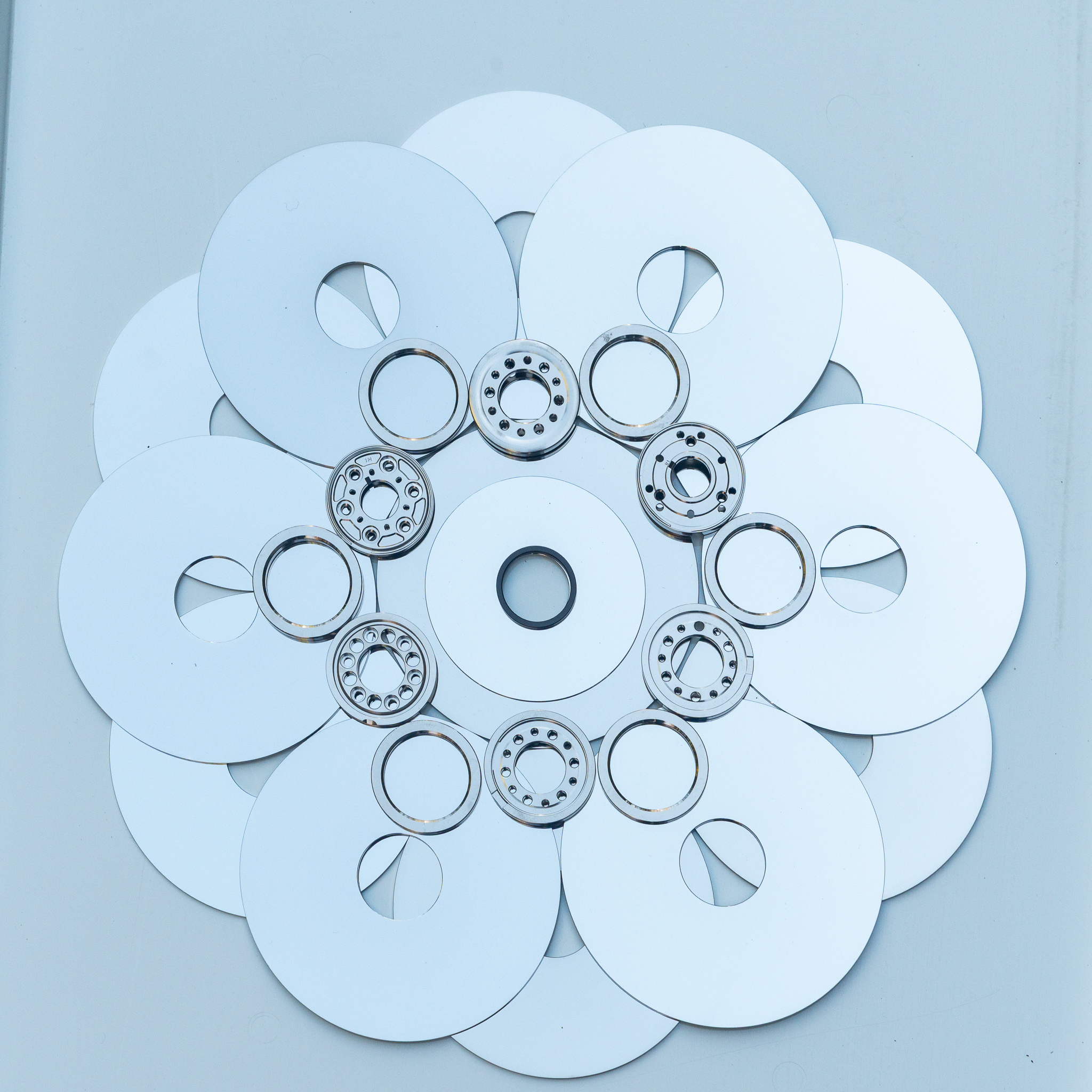
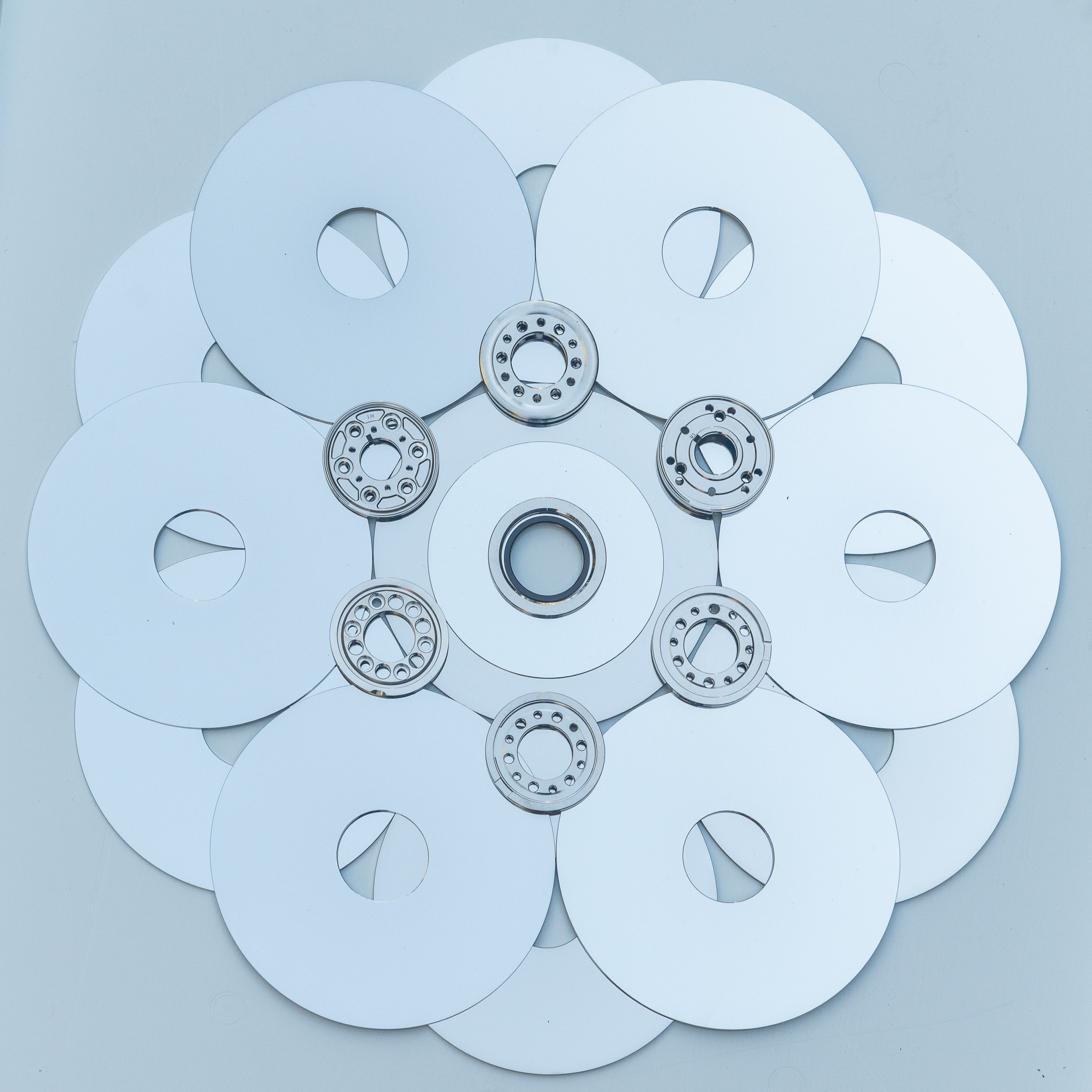
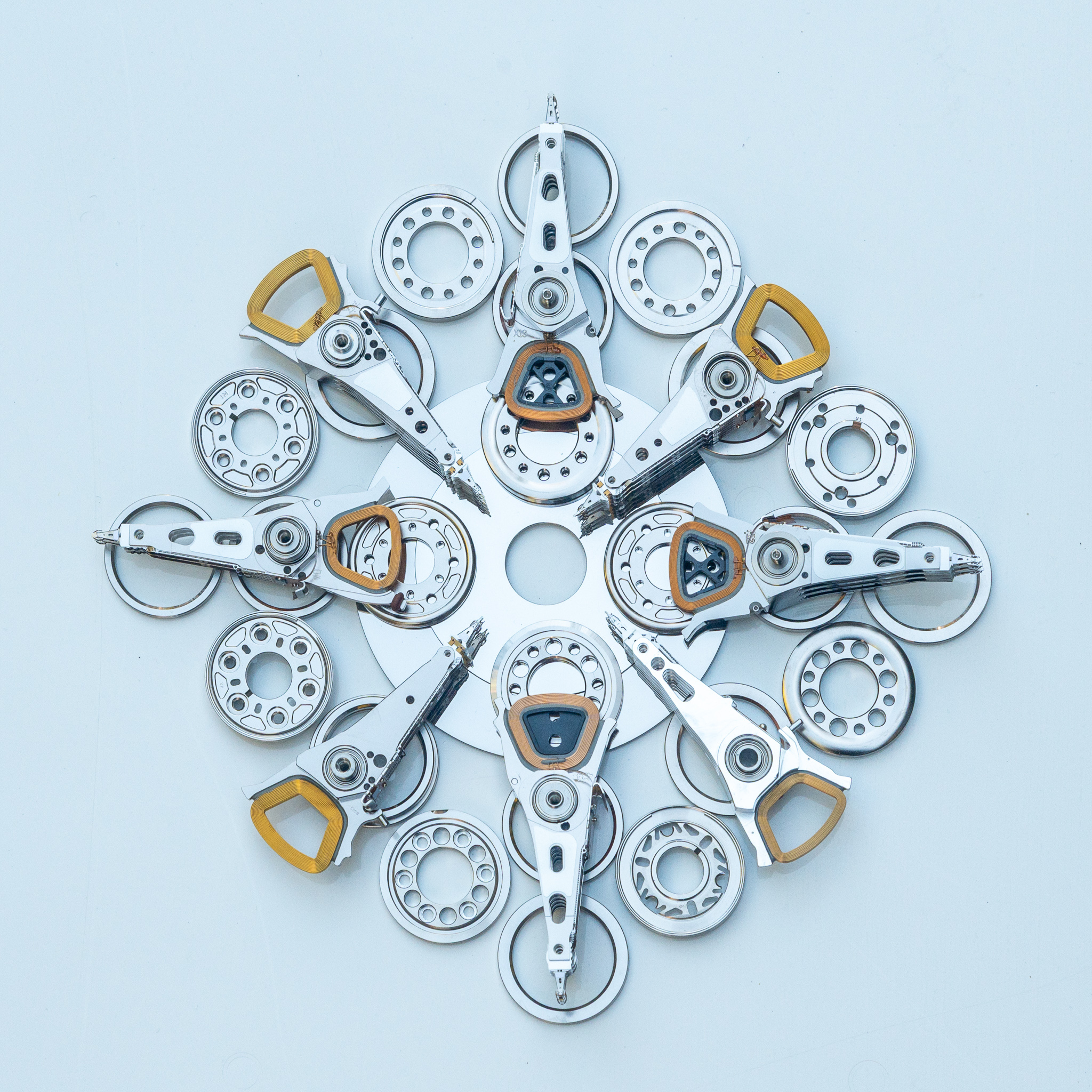
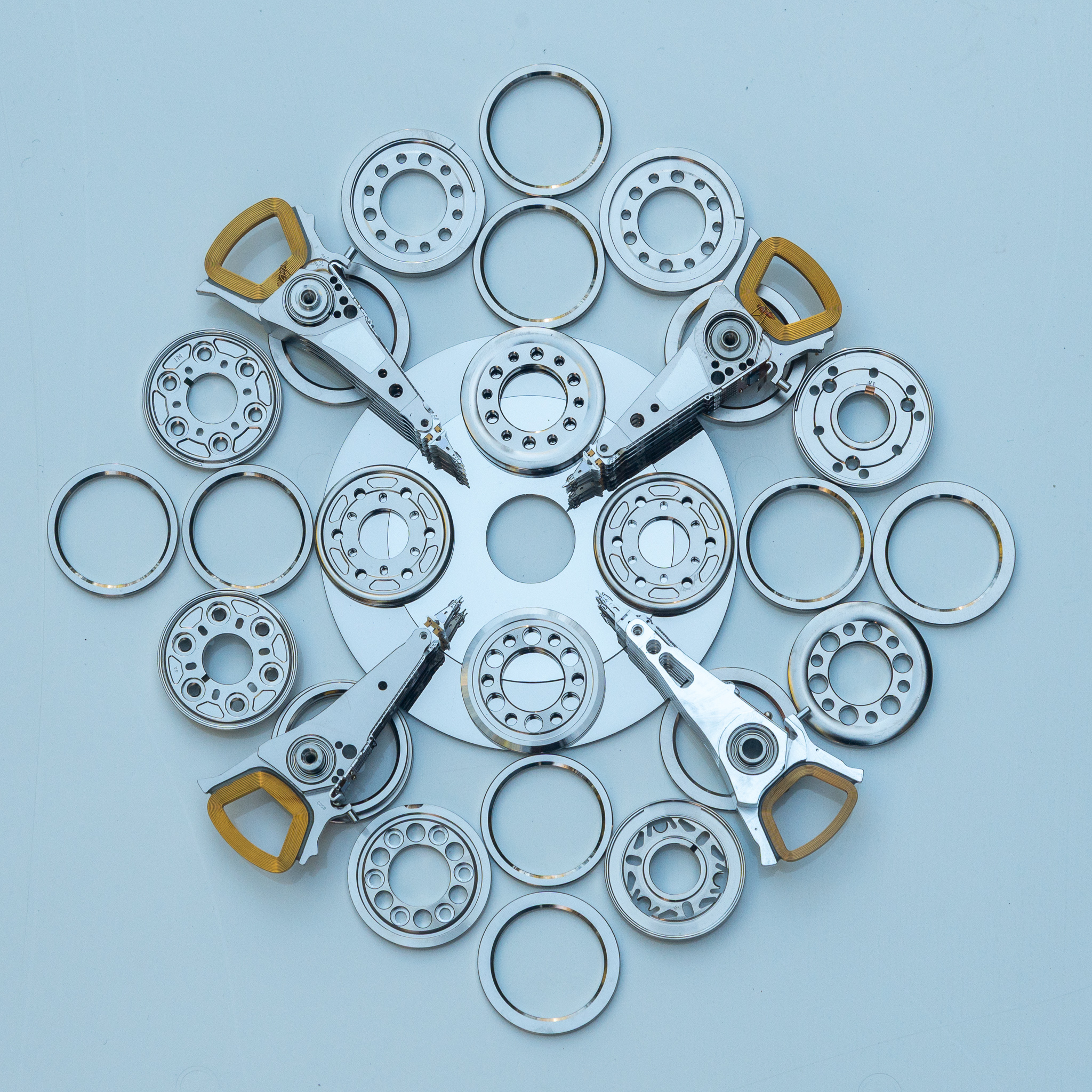
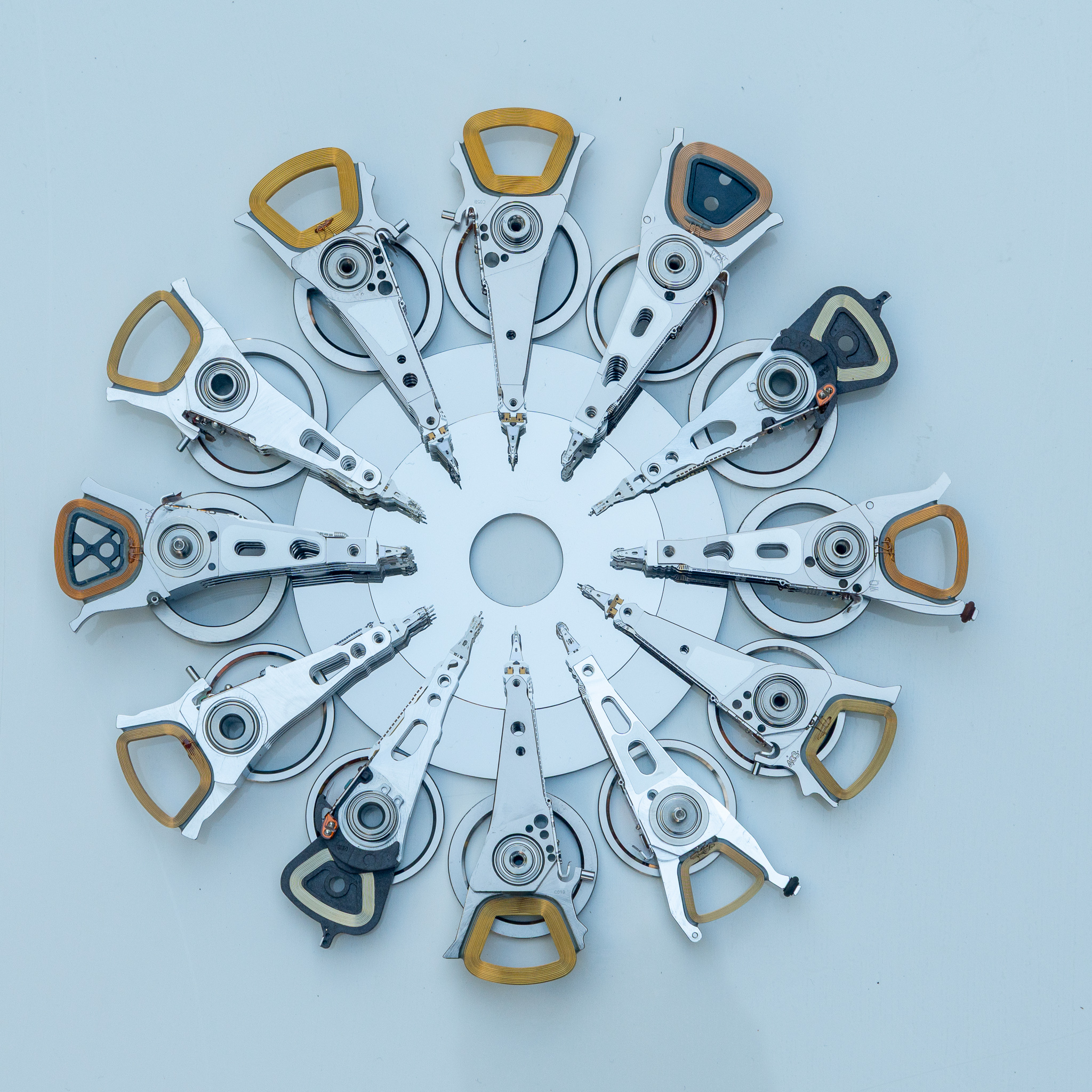
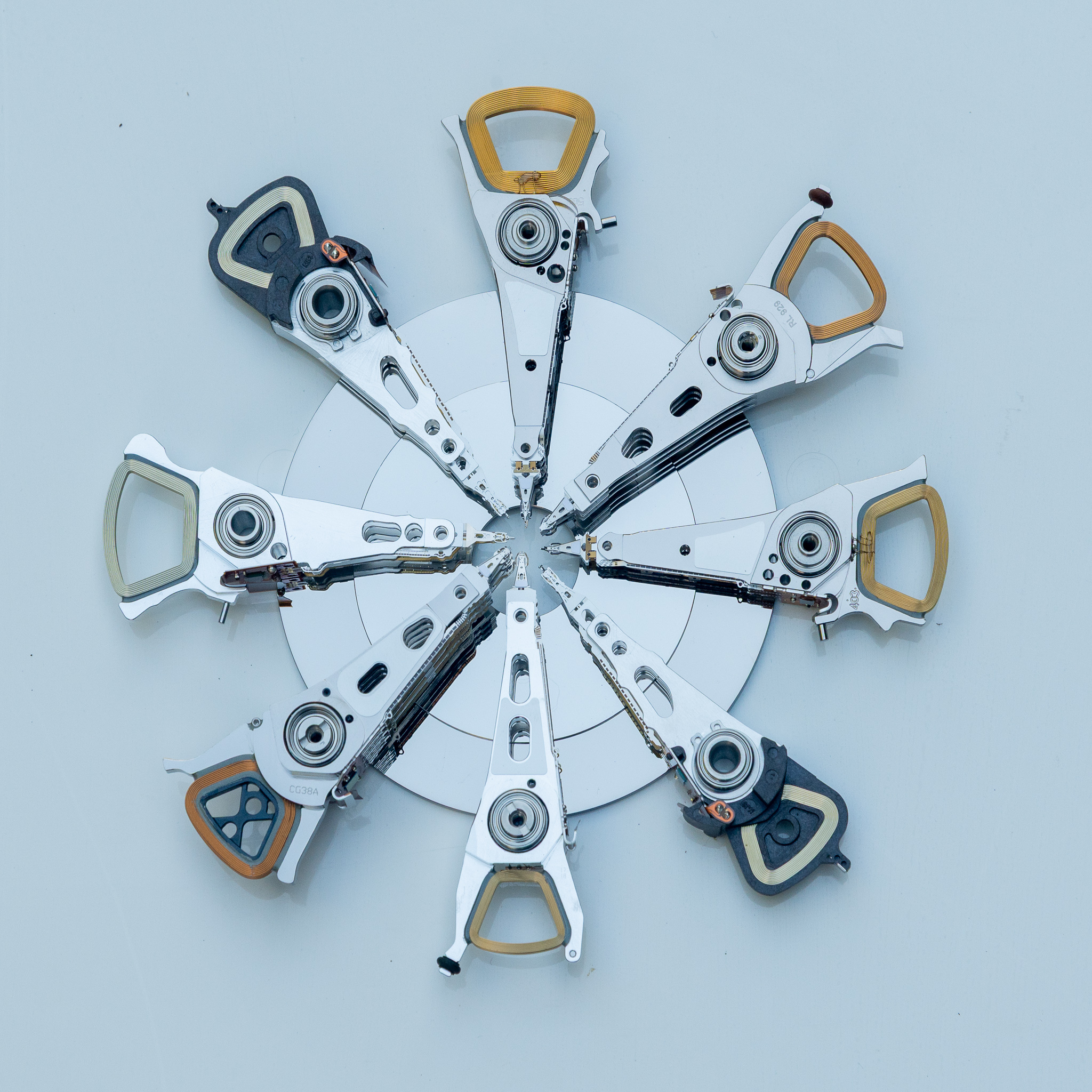
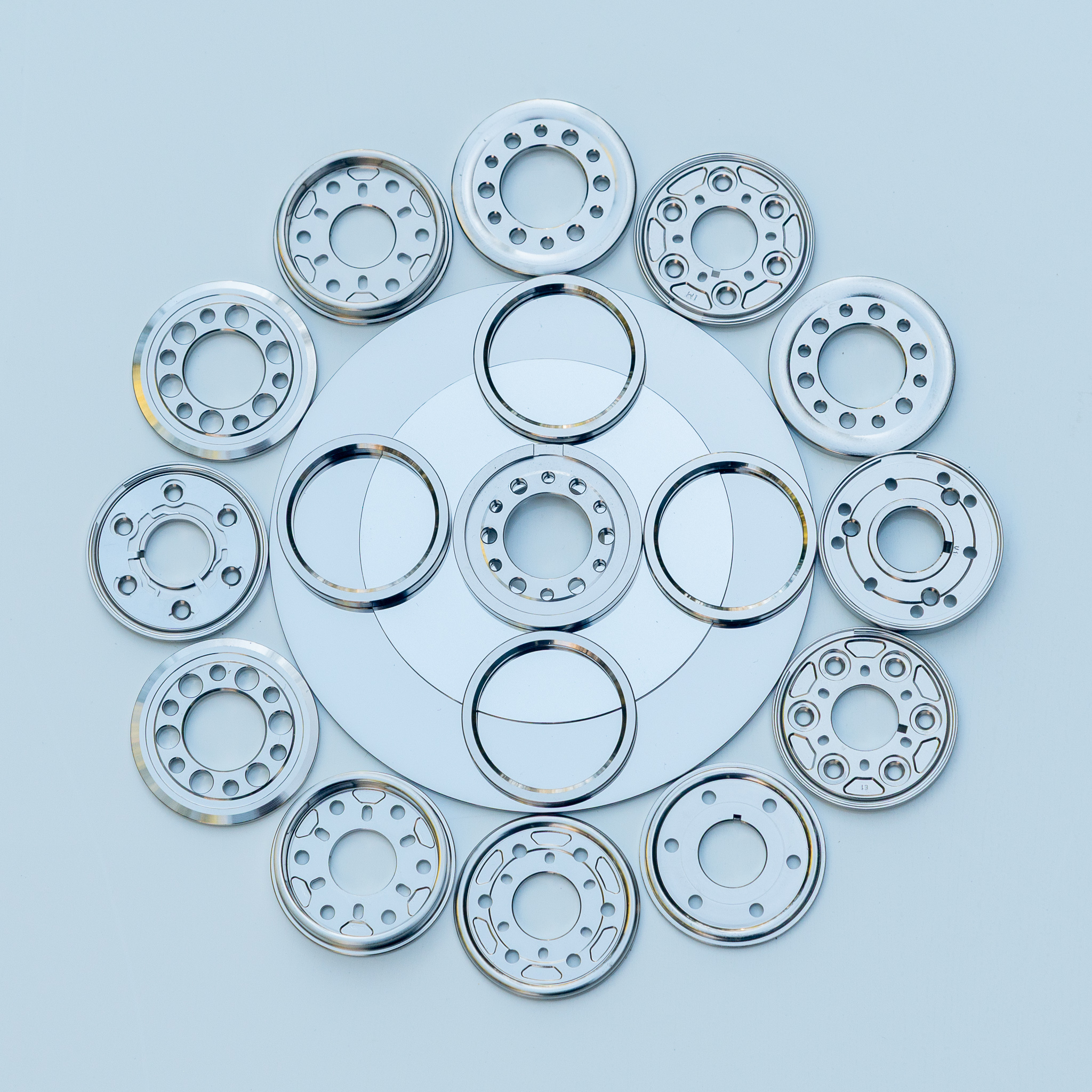
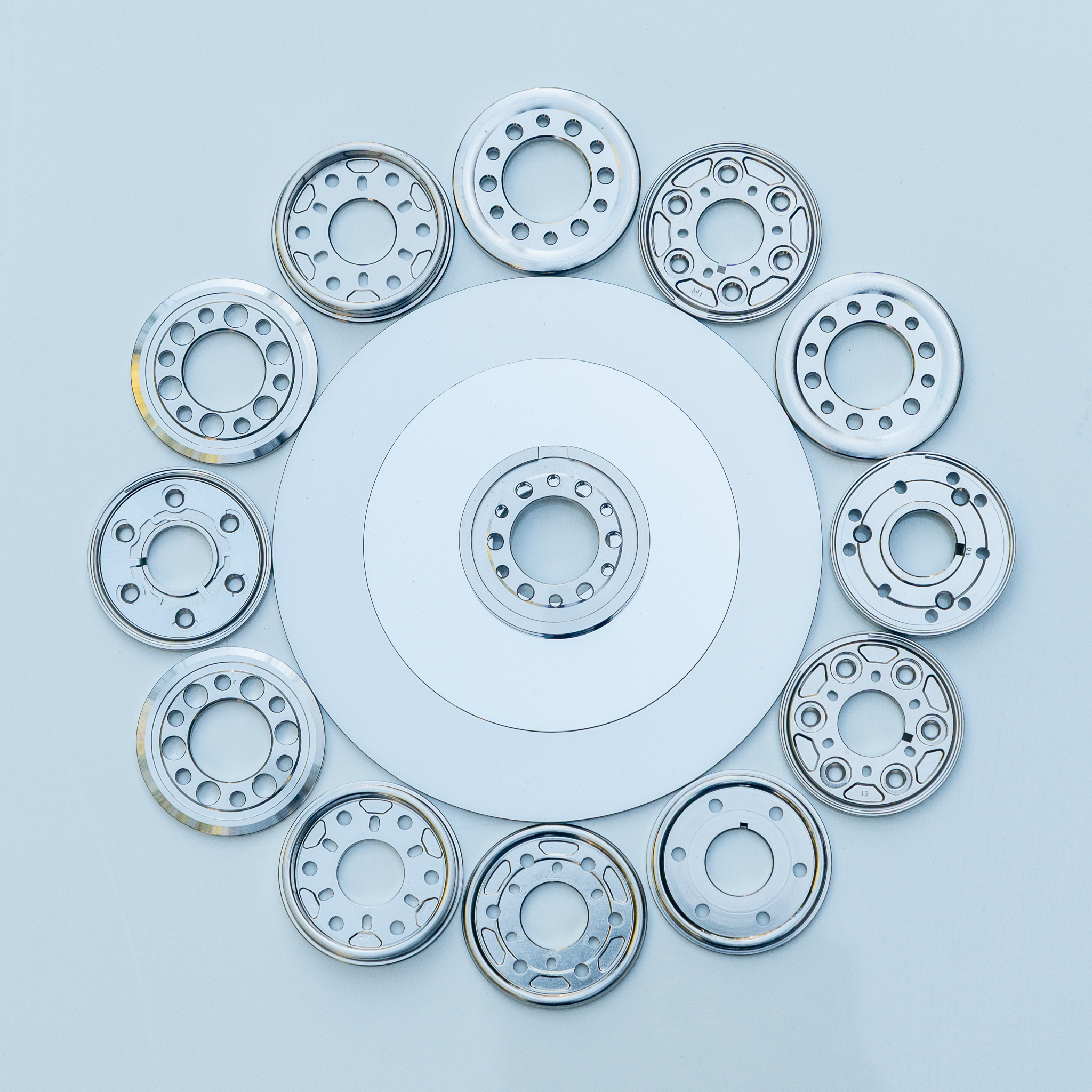

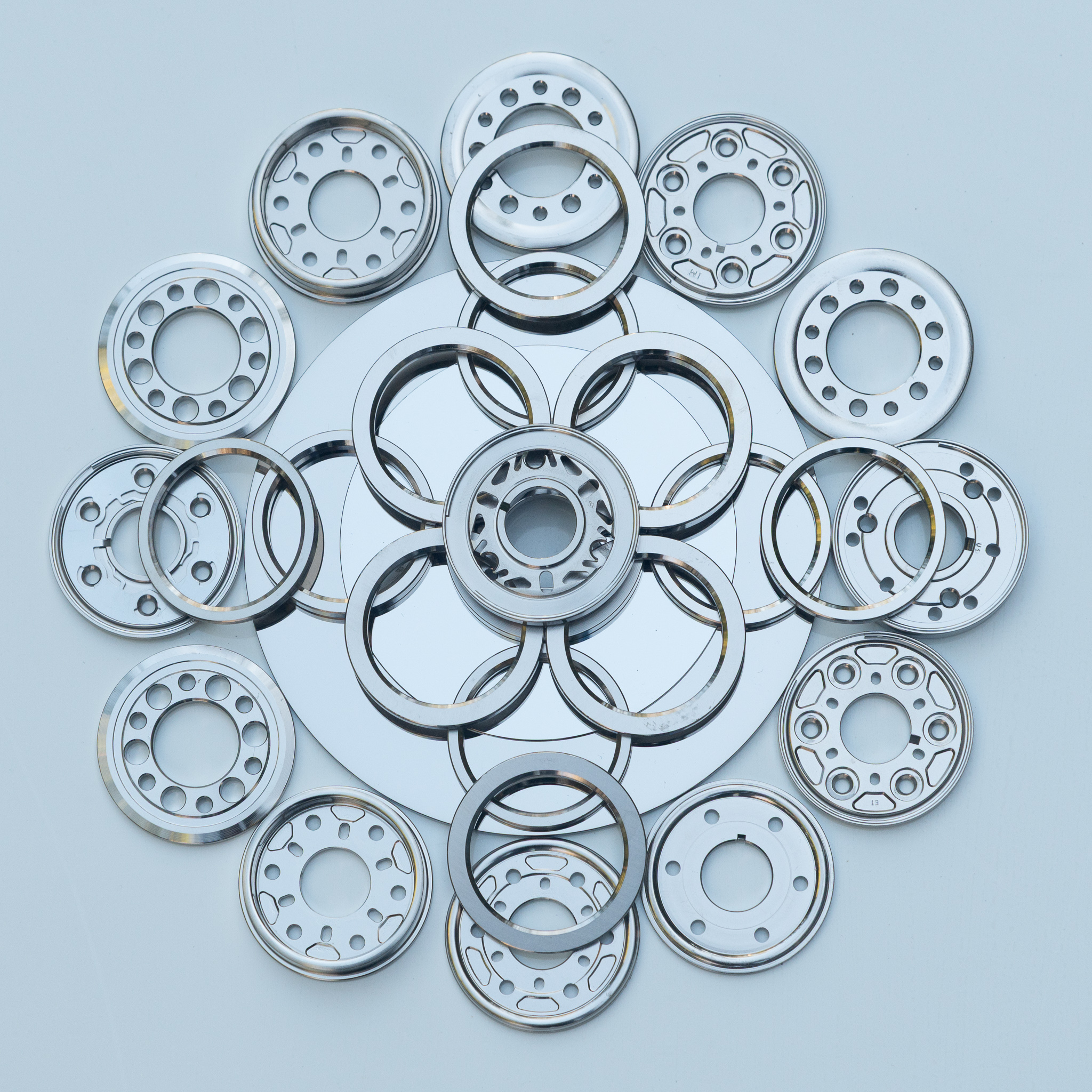
* Now, of course, we have few physical devices but all those same services are implemented on “the cloud.” This means that someone else has physical devices somewhere, with their hard drives (or SSDs) endlessly spinning, spinning, spinning (or trimming, trimming, trimming).
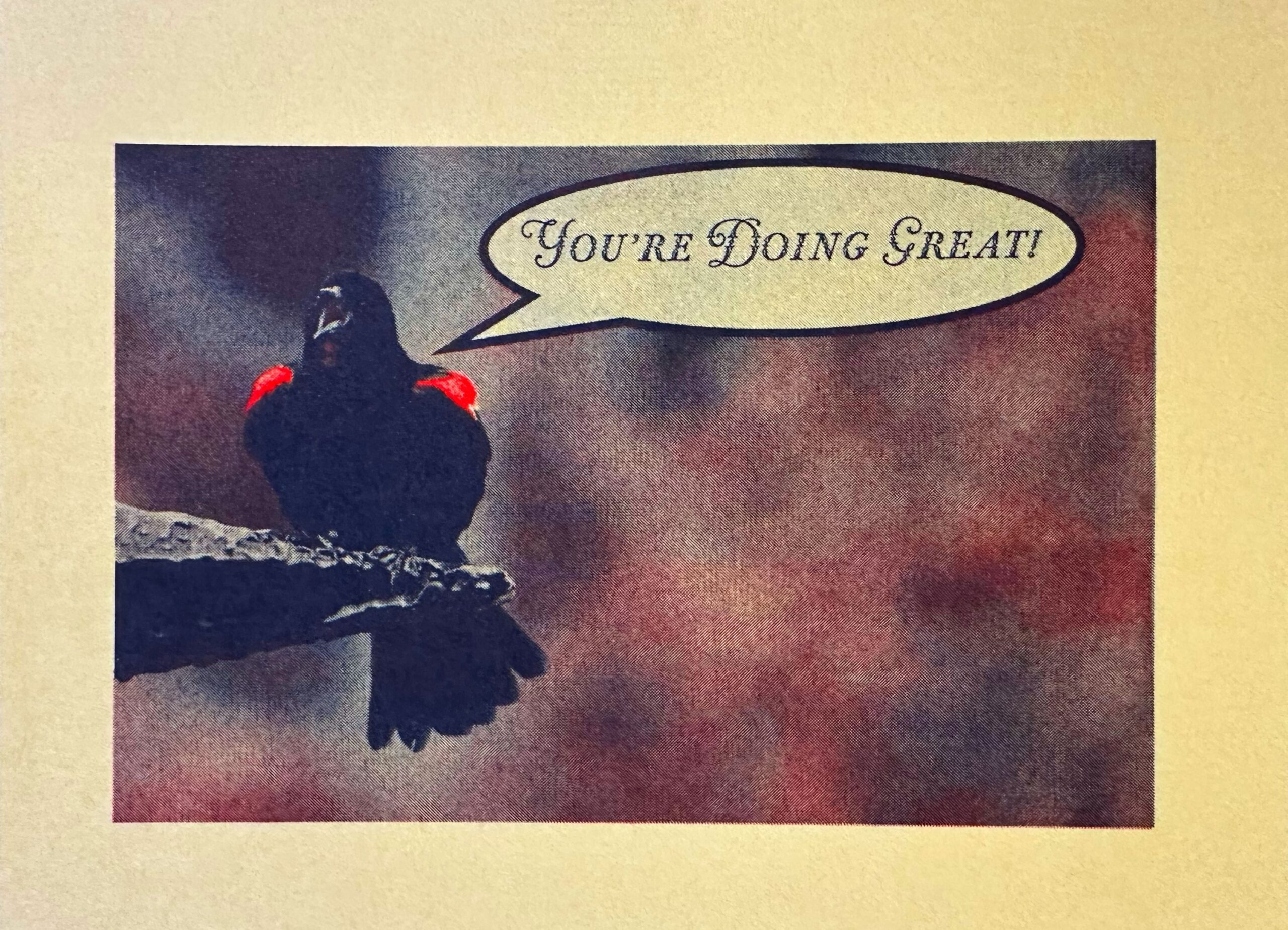
Way back in the dark ages, I worked in a print shop. I’d use a huge wall-mount camera with a vacuum-back with screens to make halftones, and print them on an AB Dick 360CD printing press. I hand-cut designs in rubylith for photographic designs, and made silk-screen masks by cutting two-layer lacquer sheets with an X-Acto knife. All this was fancy high-tech in those days, and fueling an explosive growth in small-press “reprographic” shops. Consolidation, Kinko’s, and desktop publishing were all looming — almost imperceptibly — on the horizon.
Well, that was a long time ago. I haven’t gotten significant quantities of ink on my hands in years. But at CrashSpace, there is a Risograph machine. Once high-end business printers, these fast, multicolor mimeo machines are very popular among zine makers.
I was in the space, and one of the folks there offered to teach me how to use the Risograph. It was a fun experience taking a photograph and performing color separations. Next, we put in a stack of scrap paper, loaded up the scarlet ink drum, and ran a collection. Then it’s pulling out the scarlet ink drum, loading up the black ink drum, and printing the next color. All of this, without cleaning platens, rollers, or burning new plates! What’s more, all of this, without getting my hands covered in ink!